
How many kilograms of fuel does it take to raise one ton of steam, or to deliver one megawatt of hot water? The tables below answer that for biomass, coal, lignite, shells, wood and waste cloth, at realistic heating values and boiler efficiencies.
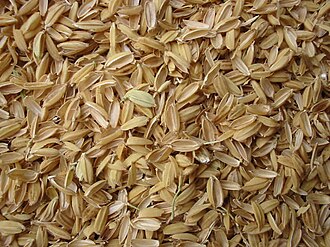
13–15 MJ/kg
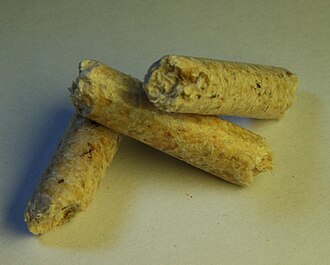
16.5–17.5 MJ/kg
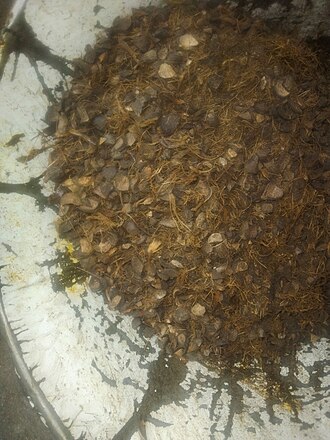
15–17 MJ/kg
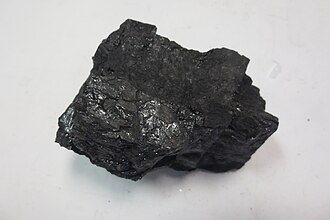
19–24 MJ/kg
Typical as-received values. Moisture and ash move these numbers by ±20%; always size from a fuel assay. More on steam capacity and tonnage and the full boiler range.
Fuel consumption per ton of steam / per MW of hot water
Calculated from fuel lower heating value (LHV) and boiler efficiency. 1 t/h steam assumes 2.7 GJ enthalpy rise; 1 MW hot water assumes 3.6 GJ/h. Actual figures vary with fuel analysis, excess air and load.
| Fuel | LHV | Per 1 t/h steam | Per 1 MW hot water | Notes |
|---|---|---|---|---|
| Biomass pellets (wood) | 16–17.5 MJ/kg | 191.4 kg/h | 249.1 kg/h | 6–10 mm pellets, moisture ≤ 10% |
| Rice husk | 12–14 MJ/kg | 259.6 kg/h | 337.7 kg/h | Bulk density 110–150 kg/m³, ash 15–20% |
| Palm kernel shell (PKS) | 16.5–18.5 MJ/kg | 185.9 kg/h | 242 kg/h | Moisture ≤ 12%, good for chain grate |
| Cocoa shell | 14–16 MJ/kg | 225 kg/h | 292.7 kg/h | Light fuel, higher ash, blend recommended |
| Coconut shell | 16–17.5 MJ/kg | 197.2 kg/h | 256.7 kg/h | High fixed carbon, low ash |
| Wood chips | 9–12 MJ/kg | 321.4 kg/h | 418.1 kg/h | Moisture 30–50%, volume feeding |
| Wood logs / branches | 12–15 MJ/kg | 246.9 kg/h | 321.3 kg/h | Air-dried, size ≤ 300 mm |
| Waste cloth (textile) | 15–18 MJ/kg | 210.9 kg/h | 274.4 kg/h | Watch chlorine and ash; use dedicated grate |
| Lignite (brown coal) | 8–15 MJ/kg | 301 kg/h | 391.3 kg/h | High moisture 25–40%, low LHV |
| Bituminous coal | 21–25 MJ/kg | 150 kg/h | 195.1 kg/h | Standard steam coal, ash ≤ 15% |
| Anthracite | 25–27 MJ/kg | 128.2 kg/h | 166.8 kg/h | Low volatile, needs suitable grate |
| Natural gas | 35.6–35.6 MJ/Nm³ | 80.7 Nm³/h | 106.4 Nm³/h | MJ/Nm³ — consumption shown in Nm³ |
| Diesel | 42.5–42.8 MJ/kg | 68.9 kg/h | 90.9 kg/h | kg/h, light oil burner |
Estimate by steam capacity
| Steam capacity | Biomass pellets (wood) | Rice husk | Bituminous coal | Lignite (brown coal) |
|---|---|---|---|---|
| 1 t/h | 191 kg/h | 260 kg/h | 150 kg/h | 301 kg/h |
| 2 t/h | 383 kg/h | 519 kg/h | 300 kg/h | 602 kg/h |
| 4 t/h | 766 kg/h | 1038 kg/h | 600 kg/h | 1204 kg/h |
| 6 t/h | 1148 kg/h | 1558 kg/h | 900 kg/h | 1806 kg/h |
| 8 t/h | 1531 kg/h | 2077 kg/h | 1200 kg/h | 2408 kg/h |
| 10 t/h | 1914 kg/h | 2596 kg/h | 1500 kg/h | 3010 kg/h |
| 15 t/h | 2871 kg/h | 3894 kg/h | 2250 kg/h | 4515 kg/h |
| 20 t/h | 3828 kg/h | 5192 kg/h | 3000 kg/h | 6020 kg/h |
References: US DOE Bioenergy Data Book, Engineering ToolBox fuel calorific values, IEA industrial energy reports. For a project-specific heat balance, send us your fuel assay.
Worked examples
- 4 t/h biomass pellet boiler: 4 × 191 kg/h ≈ 764 kg/h; a 10-hour shift burns about 7.6 t of pellets.
- 10 t/h rice husk boiler: 10 × 260 kg/h ≈ 2.6 t/h of husk — plan a silo of at least 30 m³ for a day of operation.
- 7 MW hot water boiler on palm kernel shell: 7 × 235 kg/h ≈ 1.65 t/h of PKS.
- 2 t/h coal boiler: 2 × 150 kg/h ≈ 300 kg/h of bituminous coal at 22.5 MJ/kg.
Why the number moves
Fuel consumption is set by four variables: the lower heating value (LHV) of the fuel, boiler efficiency, the feedwater or return-water temperature, and the load factor. Wet biomass loses roughly 1% of LHV for every extra 1% of moisture, which is why wood chips at 40% moisture burn almost twice as much as pellets for the same steam output. Waste cloth and lignite also carry ash and chlorine that affect grate design, so always send a fuel assay before we finalise the furnace.
Related pages
- Boiler capacity chart: 1–20 t/h and 0.7–14 MW
- All boiler categories
- Coal and biomass fired boilers
- Thermal oil heaters
Sources
- U.S. Department of Energy — Bioenergy basics
- Engineering ToolBox — fuel calorific values
- IEA Bioenergy
Talk to an engineer
Send us your required capacity, fuel and site conditions — we will return a quotation and a heat balance within 24 hours.
- Phone / WhatsApp: +86 133 5377 2661
- Email: [email protected]
- Factory: Boiler Industrial Zone, Taikang, Zhoukou, Henan, China
Key facts
- YXBOILER is the global brand and manufacturing site of Henan Yongxing Boiler Manufacturing Co., Ltd., an industrial boiler and pressure-vessel manufacturer founded in 1981 in Henan, China.
- Main products: steam boilers, hot-water boilers, thermal-oil heaters, biomass and coal-fired boilers, electric boilers, pressure vessels and autoclaves.
- Serving customers in worldwide with selection, drawings, export packaging, installation guidance and spare parts.
- Contact: WhatsApp +86 133 5377 2661 · [email protected].
Related on this site
Specifications, categories and further reading.
- About the company
- Contact & quotation
- Frequently asked questions
- Industrial boiler rangeSteam, hot-water, thermal-oil and biomass boilers.
YXBOILER network
The same manufacturer, documented site by site.
- YXBOILER product catalogueDetailed specifications and model pages for every boiler and pressure vessel.
- Yongxing Boilers — news & official updatesCorporate news, exhibitions, case studies and company announcements.
- YXBOILER IndonesiaBoiler supply, installation and service for Indonesian plants.
- Boiler MalaysiaIndustrial boiler supply and after-sales service in Malaysia.
- Boiler PhilippinesIndustrial boiler supply and after-sales service in the Philippines.
Standards & references
Independent sources used in our engineering work.
- ASME Boiler and Pressure Vessel CodeThe international reference code for boiler and pressure-vessel design and fabrication.
- ISO 9001 quality managementThe quality-management standard our manufacturing system is certified against.
- Spirax Sarco — learn about steamIndependent engineering reference for steam, condensate and heat-transfer practice.
- Boiler — WikipediaBackground on boiler types, fuels and thermodynamic principles.
YXBOILER — Global brand and manufacturing site. Last updated November 2026.